Undecane
-
- Category :
Organic chemicals and Derivatives/Aroma compounds
- CAS NO : 1120-21-4
- EC NO : 214-300-6
- Molecular Formula : C11H24
- Main Specifications : 99% min
- Synonyms : Hendecane;undecane;n-Hendecane;
Package: 25kg,50kg 200kg
Uses : As a chromatographic analysis standard
Molecular Structure:
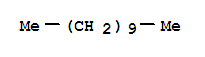
Product description:
What is the chemical of Undecane ?
Appearance: Colorless liquid, stable at room temperature and pressure, insoluble in water, but miscible with organic solvents such as alcohols and ethers. ;
Assay:99%min by GC ;
IR Identity: conform to standard ;
HNMR: conform to standard ;
carbon spectrum: conform to standard ;
Water by K. F.:0.5% max or as per the customer’s request ;
Loss on drying:0.5% max. or as per the customer’s request ;
Melting point: -25.6 to -26 °C;
boiling point: 194.5–196.3 °C;
===============================================================================
Purpose:
As a chromatographic analysis standard, it is widely used in petroleum research and organic synthesis fields.
Used for producing eleven carbon dicarboxylic acid, high-end electronic cleaning solution, chlorinated paraffin, environmentally friendly dry cleaning agent, etc.
Can be used as a sexual attractant for moths and cockroaches.
Used for manufacturing industrial products such as refrigerants, insecticides, lubricants, paints, etc.
Used as a standard reagent in scientific research, such as in the preparation of traditional Chinese medicine reference materials.
==============================================================================
Synthesis route: The industrial synthesis route of undecane is not explicitly mentioned in public information. However, according to its structure (straight chain alkane C ?? H ??) and source description, it is mainly isolated as a petroleum component and can also be prepared by synthetic methods, such as cracking longer chain alkanes or through organic synthesis pathways (such as Wurtz reaction or carbonyl synthesis).



 Search Product